Packaging design is often reduced to choosing colors and placing a logo on a box. But for brands that compete on retail shelves — where a customer decides in seconds — packaging is the product's first conversation with the world. At ARN Creative Studio, our process treats packaging as a strategic design challenge, not a decorative exercise.
Over the years, working on projects like TENG Fish Sausage and New Heng Kee, we've refined a process that consistently produces packaging that is both culturally meaningful and commercially effective. Here's how it works.
Phase 1 — Understanding the Brief
Every packaging project starts with listening. Before sketching anything, we need to understand what the product is, who buys it, where it's sold, and what the brand wants to communicate. A luxury tea brand sold in department stores has fundamentally different requirements from a heritage fish sausage sold in local markets and modern retail.
We ask questions that go beyond aesthetics: What is the product's origin story? What makes it different from competitors on the same shelf? Is there a cultural narrative worth preserving? The brief isn't just a checklist — it's the foundation that every design decision will be measured against.
Phase 2 — Cultural and Market Research
This is where many studios skip ahead to mood boards. We don't. Research is the step that separates packaging that looks good from packaging that works.
We study the competitive landscape: what's already on the shelf, what visual conventions the category follows, and where the opportunities are. For Thai brands, we also research cultural context — regional symbolism, material traditions, visual heritage — because this is often where the most distinctive design language lives.
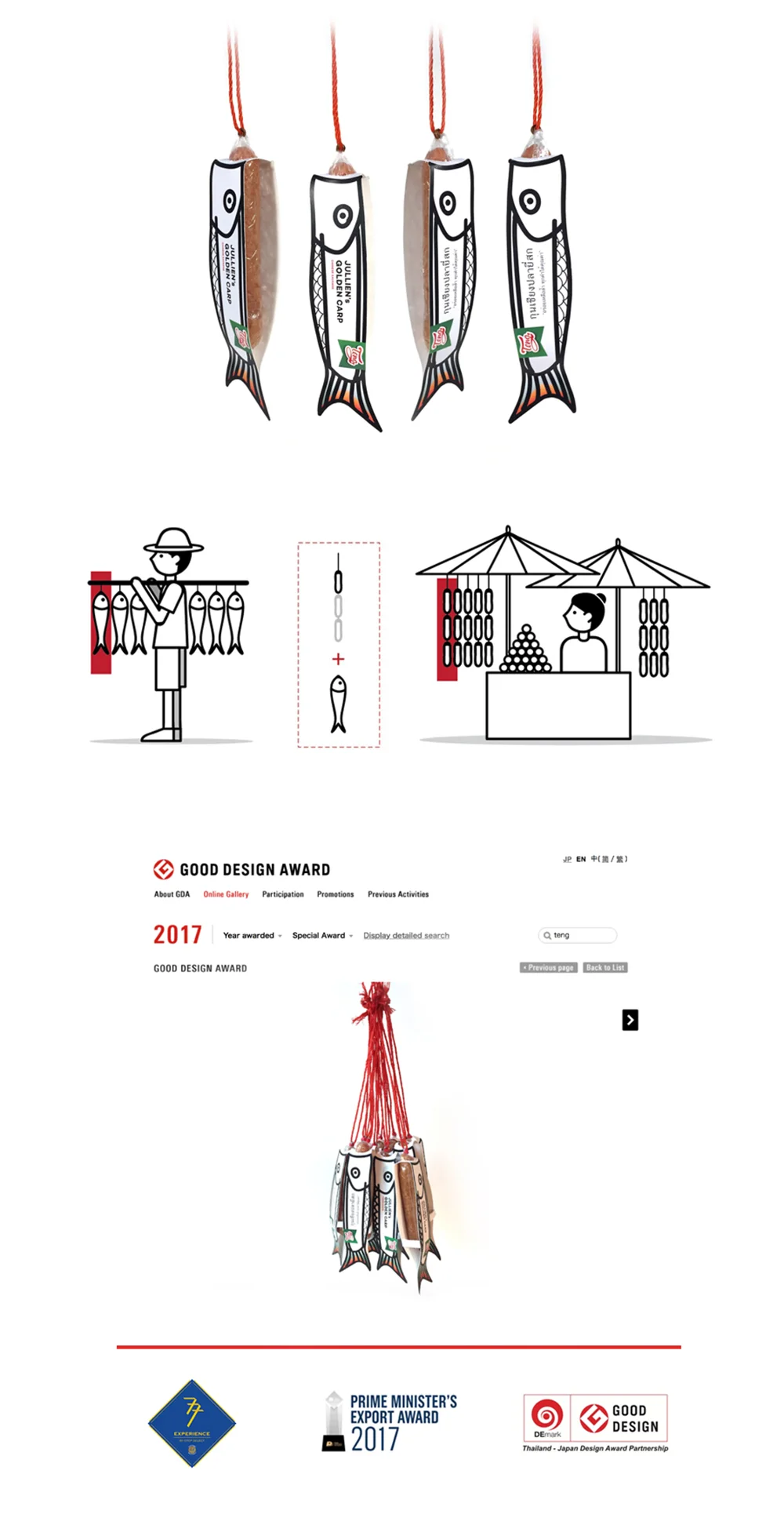
When we designed the packaging for TENG, the research phase revealed that the Seven-striped barb fish and the traditional braided rope were not just decorative details — they were the heart of the product's identity. That insight shaped every decision that followed.
Phase 3 — Concept Development
With research complete, we develop two to three distinct design directions. Each concept explores a different way to solve the brief — a different tone, a different structural approach, a different balance between heritage and modernity.
At this stage, we work across dimensions simultaneously: graphic surface (typography, illustration, color), structural form (shape, opening mechanism, material), and brand narrative (how the packaging tells the product's story). The strongest packaging designs are those where all three dimensions reinforce each other.
Concepts are presented as visual explorations, not finished art. This is deliberate — clients can engage with the strategic direction without being distracted by pixel-level details.
Phase 4 — Structural Prototyping
Packaging exists in three dimensions. What works on screen may not work in hand. Once a concept direction is selected, we move to structural prototyping — building physical mockups to test form, proportion, material feel, and opening experience.
This phase catches problems early: a shape that doesn't stack on shelves, a material that doesn't hold up in transit, a closure that frustrates the customer. We iterate quickly with rough prototypes before committing to tooling.
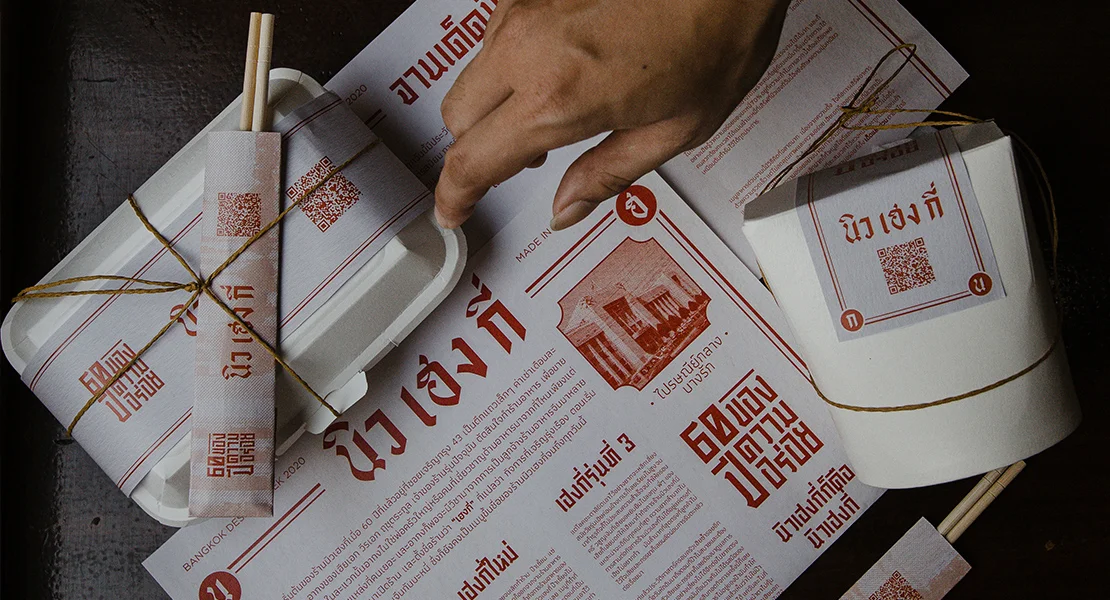
For the New Heng Kee takeaway set, prototyping was essential. The set needed to be functional for carrying food, recyclable in its materials, and beautiful enough to showcase at Bangkok Design Week 2020. Physical testing ensured all three requirements were met before production.
Phase 5 — Refinement and Pre-Production
With the structure validated, we refine the graphic design to production-ready quality. This means finalizing typography, preparing artwork at print resolution, specifying Pantone colors, and creating detailed dielines and technical drawings for manufacturers.
We work closely with printers and material suppliers during this phase. Every substrate, every finish, every ink choice affects the final result. A matte lamination changes how colors are perceived. A foil stamp adds perceived value but also adds cost. These are design decisions, not just production decisions.
Phase 6 — Production and Quality Control
We attend press checks and factory visits whenever possible. The gap between a PDF proof and a printed product can be significant — especially with specialty finishes, unusual substrates, or complex structural packaging.
Quality control isn't just about catching printing errors. It's about ensuring the tactile quality, the color accuracy, and the structural integrity match what was designed. The first production run is a critical moment, and being present ensures the design intent survives the transition from file to factory.
What Makes the Difference
A good packaging design process isn't linear — it's iterative. Ideas from prototyping feed back into graphic design. Research insights that seemed minor become central to the concept. Client feedback reshapes the direction in productive ways.
The projects that win awards — and more importantly, the projects that perform on shelves — are the ones where every phase received proper attention. Skipping research leads to generic design. Skipping prototyping leads to production problems. Rushing refinement leads to quality issues.
At ARN Creative Studio, we've learned that the process is the work. The final packaging is simply the visible result of all the invisible decisions that came before it. If you're considering a packaging project, we'd love to hear about it.
กระบวนการออกแบบแพ็คเกจจิ้ง — จาก Brief สู่ชั้นวางสินค้า
การออกแบบบรรจุภัณฑ์มักถูกลดทอนเหลือเพียงการเลือกสีและวางโลโก้บนกล่อง แต่สำหรับแบรนด์ที่แข่งขันบนชั้นวางสินค้า — ที่ลูกค้าตัดสินใจภายในไม่กี่วินาที — บรรจุภัณฑ์คือบทสนทนาแรกของสินค้ากับโลก ที่ ARN Creative Studio กระบวนการของเราปฏิบัติต่อแพ็คเกจจิ้งในฐานะโจทย์เชิงกลยุทธ์ ไม่ใช่การตกแต่ง
Phase 1 — ทำความเข้าใจโจทย์
ทุกโปรเจกต์เริ่มจากการฟัง ก่อนร่างอะไร เราต้องเข้าใจว่าสินค้าคืออะไร ใครเป็นผู้ซื้อ ขายที่ไหน และแบรนด์ต้องการสื่อสารอะไร Brief ไม่ใช่แค่เช็คลิสต์ — แต่เป็นรากฐานที่ทุกการตัดสินใจด้านการออกแบบจะถูกวัดผล
Phase 2 — วิจัยวัฒนธรรมและตลาด
ขั้นตอนนี้แยกบรรจุภัณฑ์ที่ดูดีออกจากบรรจุภัณฑ์ที่ใช้ได้จริง เราศึกษาคู่แข่ง สำรวจบริบทวัฒนธรรม — สัญลักษณ์ท้องถิ่น ประเพณีวัสดุ มรดกทางภาพ — เพราะสิ่งเหล่านี้คือแหล่งของภาษาการออกแบบที่โดดเด่นที่สุด เมื่อเราออกแบบบรรจุภัณฑ์ เต่ง การวิจัยเผยให้เห็นว่าปลาเสือห้าขีดและเชือกถักแบบดั้งเดิมไม่ใช่แค่รายละเอียดตกแต่ง แต่เป็นหัวใจของตัวตนสินค้า
Phase 3 — พัฒนาแนวคิด
จากผลวิจัย เราพัฒนา 2-3 ทิศทางการออกแบบ แต่ละแนวคิดสำรวจวิธีแก้โจทย์ที่แตกต่าง — โทนที่ต่างกัน โครงสร้างที่ต่างกัน สมดุลระหว่างมรดกและความร่วมสมัย เราทำงานข้ามมิติพร้อมกัน: พื้นผิวกราฟิก โครงสร้างรูปทรง และเรื่องเล่าของแบรนด์
Phase 4 — สร้างต้นแบบโครงสร้าง
บรรจุภัณฑ์อยู่ในสามมิติ สิ่งที่ทำงานบนหน้าจออาจไม่ทำงานในมือ เราสร้าง mockup จริงเพื่อทดสอบรูปทรง สัดส่วน สัมผัสวัสดุ และประสบการณ์การเปิด สำหรับ New Heng Kee การสร้างต้นแบบจำเป็นอย่างยิ่ง — ชุดต้องใช้งานได้จริง รีไซเคิลได้ และสวยพอที่จะจัดแสดงใน Bangkok Design Week 2020
Phase 5 — ขัดเกลาและเตรียมผลิต
เมื่อโครงสร้างผ่านการตรวจสอบ เราปรับกราฟิกให้พร้อมผลิต — จบตัวอักษร เตรียมอาร์ตเวิร์คความละเอียดสูง กำหนดสี Pantone และสร้าง dieline รายละเอียดสำหรับโรงงาน ทุกการเลือกพื้นผิว วัสดุ และหมึก ล้วนเป็นการตัดสินใจด้านการออกแบบ ไม่ใช่แค่การผลิต
Phase 6 — ผลิตและควบคุมคุณภาพ
เราเข้าร่วมตรวจงานพิมพ์และเยี่ยมโรงงานทุกครั้งที่ทำได้ ช่องว่างระหว่าง proof กับชิ้นงานจริงอาจมีนัยสำคัญ การอยู่ในกระบวนการรับรองว่าเจตนาของการออกแบบจะรอดผ่านจากไฟล์ไปสู่โรงงาน
กระบวนการที่ดีไม่เป็นเส้นตรง แต่วนซ้ำ ไอเดียจากการสร้างต้นแบบย้อนกลับมาปรับกราฟิก ข้อมูลวิจัยที่ดูเล็กน้อยกลายเป็นศูนย์กลางของแนวคิด โปรเจกต์ที่ได้รางวัล — และที่สำคัญกว่า โปรเจกต์ที่ขายได้จริง — คือโปรเจกต์ที่ทุกขั้นตอนได้รับความใส่ใจอย่างเหมาะสม หากคุณกำลังพิจารณาโปรเจกต์บรรจุภัณฑ์ เรายินดีรับฟัง
See our work: TENG Fish Sausage
| New Heng Kee
| All Projects
Related reads: TENG Case Study
| New Heng Kee Case Study
| Beartai Case Study